Nature and ADHD
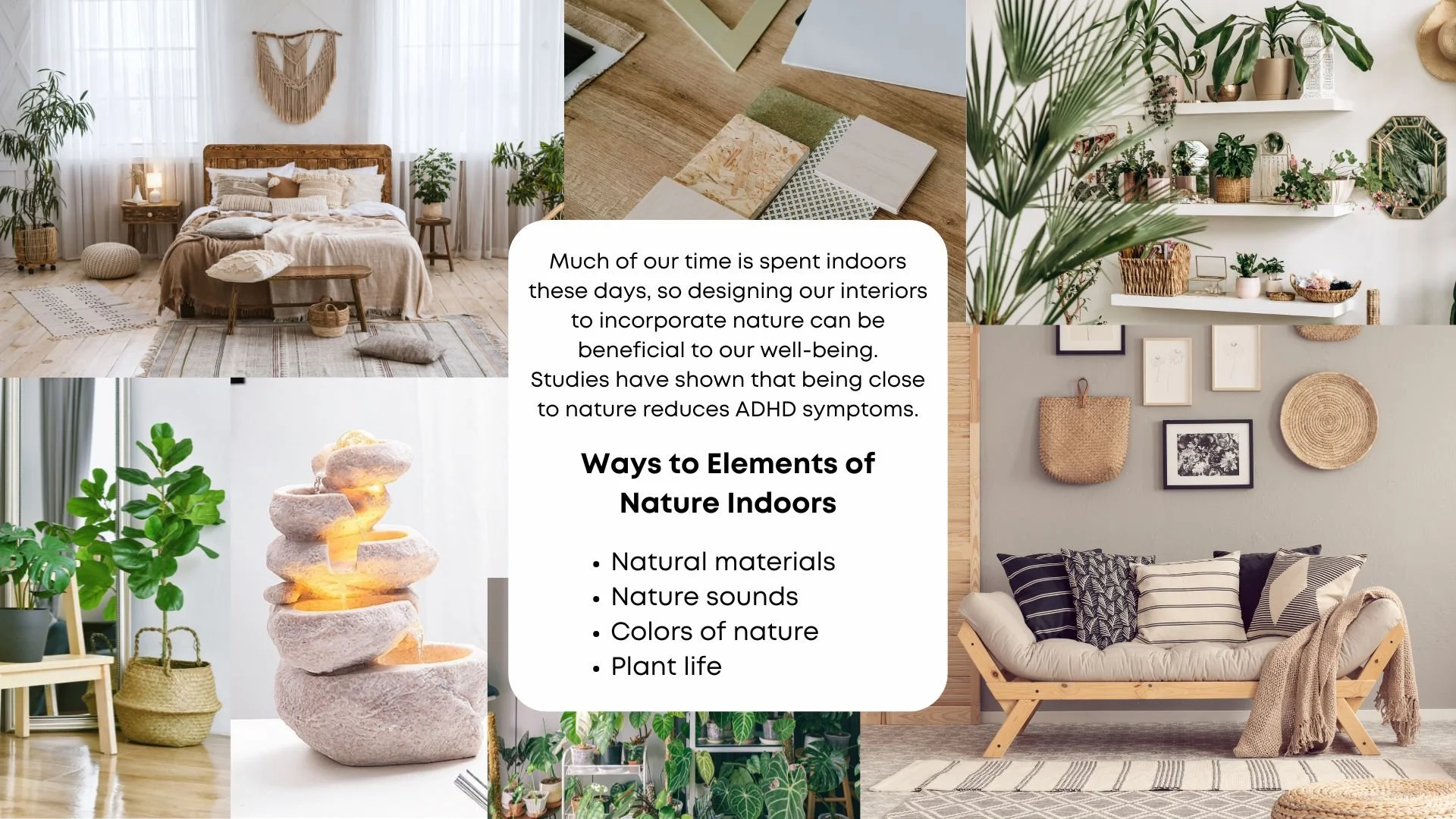
Designers and architects can take advantage of the similarity principle by incorporating biophilic elements similar to nature to benefit mental health, physical health, and well-being in the home. This creates a connection between the natural environment and the built environment. Incorporating nature is beneficial, but having too many plants to maintain can be hard to manage. The principle of similarity is useful in design because by placing similar objects together, tasks and visual input can be simplified, creating fewer distractions. Similarity is not just visually grouping similar items together but grouping items together that help accomplish the same or similar tasks. One example of this could be grouping living plants together with the watering can full of water. This will help to simplify the task of watering the plants because they are located together. Individuals with ADHD are easily distracted from tasks; many people say it is difficult to get even the smallest tasks accomplished. For example, when plants are located in too many different areas of a home, an individual could easily get distracted away from the immediate task of watering plants as they walk from place to place, observing other tasks to be done.
The similarity principle overlaps and is closely related to the proximity principle because of the benefits of grouping similar elements or features. Using simple technology that helps to automate tasks is beneficial.
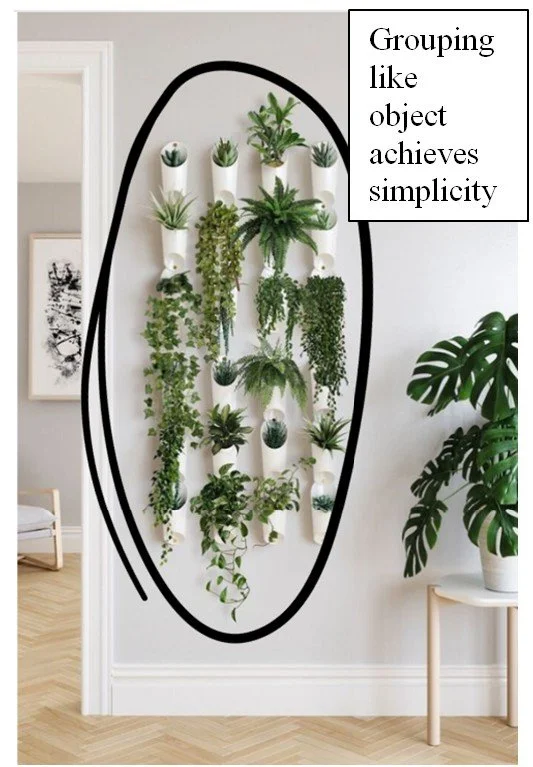
For example, using self-watering devices can help to cut down on the number of times a plant needs to be watered. Incorporating nature does not have to be literal. Nature can be introduced into a space through the use of images, materials, or sounds.
Objects that are not similar will stand out visually in a space. There can be many different factors that make them stand out, such as scale, color, lighting, isolation from a grouping, and placement. As designers, we can use these variables to make an object stand out. Being different from the overall space can encourage attention, and when purpose is applied to what is summoning attention, visual cues are created, which can change the way an individual behaves in the environment.